Posts

WHAT IS DNA?

Image
DNA and GENETICS HOME REFERENCE-NIH What is DNA? DNA, or deoxyribonucleic acid, is the hereditary material in humans and almost all other organisms. Nearly every cell in a person’s body has the same DNA. Most DNA is located in the cell nucleus (where it is called nuclear DNA), but a small amount of DNA can also be found in the mitochondria (where it is called mitochondrial DNA or mtDNA).  Mitochondria  are structures within cells that convert the energy from food into a form that cells can use. The information in DNA is stored as a code made up of four chemical bases: adenine (A), guanine (G), cytosine (C), and thymine (T). Human DNA consists of about 3 billion bases, and more than 99 percent of those bases are the same in all people. The order, or sequence, of these bases determines the information available for building and maintaining an organism, similar to the way in which letters of the alphabet appear in a certain order to form words and se...

HAY'S TEST FOR BILE SALTS

Image
HAY'S TEST FOR BILE SALTS Hay’s test for bile salts – Its principle, reagent and procedure Hay’s test for bile salts: Hay’s test for bile salts is a specific test used for the qualitative detection of bile salts in urine. Bile salt appears in the urine of patients suffering from jaundice. It consists of a watery mixture of organic and inorganic compounds. Bile acids are cholic acid and chenodeoxycholic acid which form conjugation with glycine and taurine. These two bile acids combine with sodium and potassium to form bile salts. Bile salts are sodium or potassium taurocholate, and sodium or potassium glycocholate. Hay’s test is also called  sulphur powder test . Hay’s test for bile salts principle: Bile salts have a property of lowering the surface tension of the fluid. If Bile salts present in urine and sulphur powder is added to the urine in the test tube, the sulphur particles will sink. In normal cases it does not sink rather, it floats on the surfa...

Fungal Infections

Image
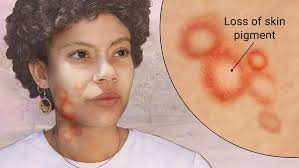
            fungal infections Fungal infections are common throughout much of the natural world. In humans, fungal infections occur when an invading fungus takes over an area of the body and is too much for the immune system to handle. Fungi can live in the air, soil, water, and plants. There are also some fungi that live naturally in the human body. Like many microbes, there are helpful fungi and harmful fungi. When harmful fungi invade the body, they can be difficult to kill, as they can survive in the environment and re-infect the person trying to get better. In this article, we take a look at who is most at risk of getting a fungal infection and what the symptoms and treatment options are for some common types. Who is at risk? Fungal infections are common in humans and are usually not very serious if they are treated quickly and correctly. Anyone with a weakened immune system may be more likely to contract a fungal infection, as well...

LIFE STYLE OF SCHISTOSOMA

Image
                                                LIFE CYCLE *the stage in the snail include two generation of SPOROCYST *after sporocyst,cercariae are produce within the snail *Upon release from the snail  the infective cercariae swim, penetret theskin of the  human host *During penetration to the human host the cercariae shed their forkedtail and become schistomalae and schistomulae migrate through several tissue and stages to their residence in the veins and mature into adult worms. *Adult worms in human reside in the mecenteric venulesin varias location , which at time seem to be specific schistosoma japonicum is more frequently found in the Superior mesenteric vein,draining the small intestine schistosoma manson occur more often the superior   mecenterih vein draining the large intestine. *Both japonicum and schistosoma manson can occupy either...

Collection Routine Specimens

Image
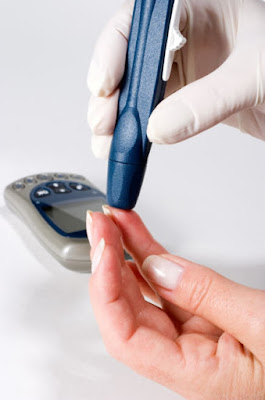
Collection Routine Specimens Collection Routine Specimens for Laboratory Investigations   ·    SOPs (Standard Operating Procedures) o     Is the established method for performing laboratory procedures and  aim to standardise procedures in the laboratory technical work ·    Finger prick specimen o     Is a Capillary blood collected from a pierced finger ·   Venous blood sample o     Blood collected from a vein Materials Used for Collecting Venous Blood and Finger Prick   Common materials for both venous blood collection and finger prick ·           Sterile swab Used for cleaning the skin ·           70% alcohol Used for disinfecting the skin ·           Gloves Used to protect the phlebotomist from contamination ·  ...