Posts

DIABETES MELLITUS

Image
        Diabetes Mellitus Diabetes is a disease of the pancreas, an organ that produces the hormone insulin. While health care providers do not yet know what causes diabetes, certain factors can increase a person’s chance of getting diabetes. What is diabetes mellitus? Diabetes mellitus is a disease that prevents your body from properly using the energy from the food you eat. Diabetes occurs in one of the following situations: The pancreas (an organ behind your stomach) produces little insulin or no insulin at all. (Insulin is a naturally occurring hormone, produced by the beta cells of the pancreas, which helps the body use sugar for energy.) -Or- The pancreas makes insulin, but the insulin made does not work as it should. This condition is called insulin resistance. To better understand diabetes, it helps to know more about how the body uses food for energy (a process called metabolism). Your body is made up of millions of cells. To make en...

Top 10 laboratory interview questions

Image
Top 10 laboratory interview questions with answers                                                                                     1. Top 10 laboratory interview questions with answers In this file, you can ref interview materials for laboratory such as, laboratory situational interview, laboratory behavioral interview, laboratory phone interview, laboratory interview thank you letter, laboratory interview tips … Other useful materials for laboratory interview: • topinterviewquestions.info/free-ebook-80-interview-questions-and-answers • topinterviewquestions.info/free-ebook-18-secrets-to-win-every-job-interviews • topinterviewquestions.info/13-types-of-interview-questions-and-how-to-face- them • topinterviewquestions.info/top-8-interview-thank-you-letter-samples ...

WHAT IS DNA?

Image
DNA and GENETICS HOME REFERENCE-NIH What is DNA? DNA, or deoxyribonucleic acid, is the hereditary material in humans and almost all other organisms. Nearly every cell in a person’s body has the same DNA. Most DNA is located in the cell nucleus (where it is called nuclear DNA), but a small amount of DNA can also be found in the mitochondria (where it is called mitochondrial DNA or mtDNA).  Mitochondria  are structures within cells that convert the energy from food into a form that cells can use. The information in DNA is stored as a code made up of four chemical bases: adenine (A), guanine (G), cytosine (C), and thymine (T). Human DNA consists of about 3 billion bases, and more than 99 percent of those bases are the same in all people. The order, or sequence, of these bases determines the information available for building and maintaining an organism, similar to the way in which letters of the alphabet appear in a certain order to form words and se...

HAY'S TEST FOR BILE SALTS

Image
HAY'S TEST FOR BILE SALTS Hay’s test for bile salts – Its principle, reagent and procedure Hay’s test for bile salts: Hay’s test for bile salts is a specific test used for the qualitative detection of bile salts in urine. Bile salt appears in the urine of patients suffering from jaundice. It consists of a watery mixture of organic and inorganic compounds. Bile acids are cholic acid and chenodeoxycholic acid which form conjugation with glycine and taurine. These two bile acids combine with sodium and potassium to form bile salts. Bile salts are sodium or potassium taurocholate, and sodium or potassium glycocholate. Hay’s test is also called  sulphur powder test . Hay’s test for bile salts principle: Bile salts have a property of lowering the surface tension of the fluid. If Bile salts present in urine and sulphur powder is added to the urine in the test tube, the sulphur particles will sink. In normal cases it does not sink rather, it floats on the surfa...

Fungal Infections

Image
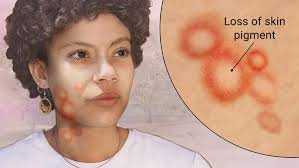
            fungal infections Fungal infections are common throughout much of the natural world. In humans, fungal infections occur when an invading fungus takes over an area of the body and is too much for the immune system to handle. Fungi can live in the air, soil, water, and plants. There are also some fungi that live naturally in the human body. Like many microbes, there are helpful fungi and harmful fungi. When harmful fungi invade the body, they can be difficult to kill, as they can survive in the environment and re-infect the person trying to get better. In this article, we take a look at who is most at risk of getting a fungal infection and what the symptoms and treatment options are for some common types. Who is at risk? Fungal infections are common in humans and are usually not very serious if they are treated quickly and correctly. Anyone with a weakened immune system may be more likely to contract a fungal infection, as well...